What does commercial roof repair actually cost in Raintree Village?
Most commercial repairs in Raintree Village land between $400 and $4,500, depending on the membrane, the access, and how much wet insulation sits underneath. A simple TPO seam weld or a clean EPDM puncture patch is usually in the $400 to $900 range. Replacing a section of saturated insulation board with new cover and membrane often runs $1,800 to $4,500. Larger storm driven repairs across multiple penetrations can push past $7,000, at which point we will sit down with you and talk about whether commercial roof replacement makes more sense than chasing leaks year after year.
Two factors push pricing within those ranges more than anything else: rooftop access and the condition of what sits below the membrane. A single story building with a roof hatch and clear interior staging is cheaper to repair than a four story building requiring a boom lift, street permits, and crane staging for materials. And when probes reveal wet insulation extending well beyond the visible stain, the tear out and replacement scope grows quickly. We give you a written scope after the inspection so you can see exactly what drives the number, not a flat quote with no detail behind it.
How fast can Raintree Village Metal Roofing get to my building if water is coming in?
For active leaks, we assess severity over the phone first. If you describe water hitting inventory, electrical panels, or ceiling tiles dropping, we move you to the front of the schedule and prioritize tarping and dry in so the inside damage stops growing. We do not promise a clock time on this page because weather, current job load, and your building's roof access all change the answer. What we will tell you on the call is a realistic window for that day, and if it is not soon enough, we will say so plainly. Our commercial emergency roof repair crews carry shrink patch materials for TPO and EPDM, peel and stick for modified bitumen, and butyl tape for metal seams so a temporary seal can hold until conditions allow a permanent fix.
When you call about an active leak, have a few things ready that speed the response: the building address and best rooftop access point, the membrane type if you know it, and a description of where water is showing up inside. Photos of the interior damage help us bring the right tarps and patch materials on the first trip. If your facility has restricted hours or security requirements, tell us up front so we can route a crew that can actually get on the roof when they arrive.
Do I need an inspection before getting a price?
Yes, and we do not charge for it. Anyone who quotes a commercial roof repair without walking it is guessing. During a commercial roof inspection, we walk the field, check every penetration, probe suspect areas for soft insulation, photograph the conditions, and infrared scan when ponding history suggests trapped moisture. You get the photos and the findings whether you hire us or not. If we cannot help, or if your situation is better suited to a different contractor, we will tell you directly on the call after the inspection.
What about metal roofs and standing seam systems?
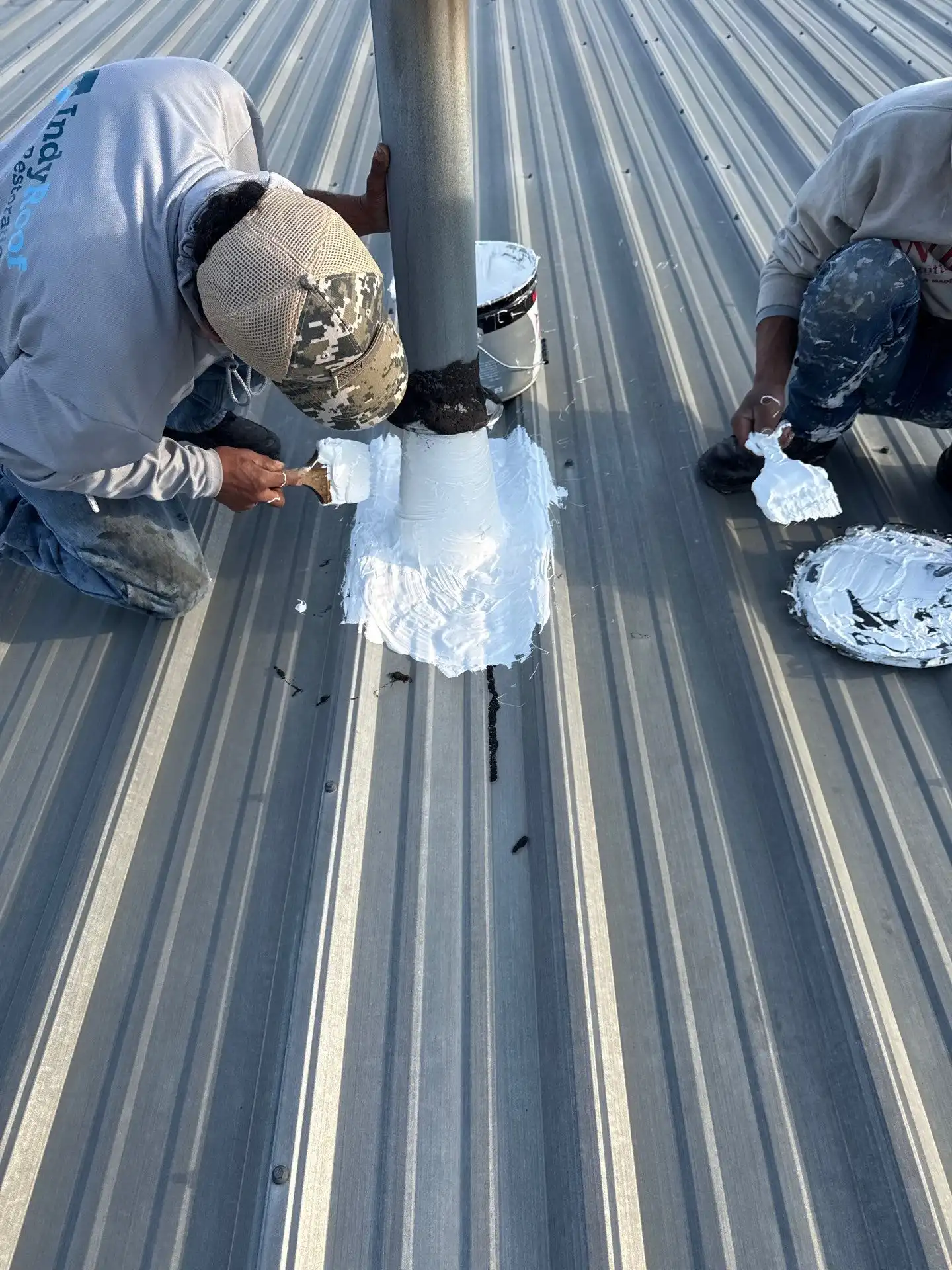
Metal roofs in Raintree Village typically leak at fasteners, end laps, and pipe penetrations long before the panels themselves fail. Most repairs involve replacing rubber washered screws, sealing end laps with butyl tape and metal grade sealant, and rebuilding pipe flashings. When corrosion is widespread or panel coatings are chalking off, a coating system or panel over retrofit becomes the conversation. If you are planning a new building or an over build, our commercial metal roofing install team can walk you through panel gauge, finish, and clip options that hold up to Indiana weather.
Should I repair, recoat, or replace?
This is the question that decides whether you spend $2,000 or $80,000. The honest answer depends on three things: the percentage of the roof showing failure, the moisture content under the membrane, and how many years you need the building to perform. If under 25 percent of the roof shows issues and the insulation scans dry, repair is the right call. If 25 to 60 percent is affected but the deck and most insulation are sound, a fluid applied recoat may extend life by 10 to 15 years at roughly half the cost of replacement. Above 60 percent, or if the deck is rusting or rotting, you are throwing money at a roof that needs to come off.
Building ownership timeline also matters. If you plan to sell within two or three years, repair plus documentation often serves you better than a major capital expense you will not recover at closing. If you intend to hold the property for a decade or longer, replacement or recoat usually pencils out because repair costs compound and inside damage gets harder to predict.
What causes most commercial roof leaks here?
In Raintree Village, the top offenders are aging seams on single ply membranes, failed pipe boots and pitch pans around HVAC curbs, separated metal counterflashing on parapet walls, and ponding water around clogged scuppers and drains. Hail bruising is a regular issue after Indiana spring storms, and freeze thaw cycles will widen any small crack a membrane already has. On older built up roofs, the blisters and alligatoring you see across the field tell us the asphalt has lost its oils and the system is at the end of its service life. A patch will buy time, but it will not fix what is happening across the whole roof.
Foot traffic damage is another quiet cause we trace back constantly. HVAC technicians, satellite installers, and even your own maintenance staff walking the same path month after month grinds membrane against the insulation below, eventually creating splits you cannot see from the ground. Adding walk pads along service routes is a cheap fix that prevents thousands in repairs later. Loose debris is the other invisible culprit: a single screw left behind after rooftop equipment work can punch through a membrane during the first hot day when expansion pulls it down hard.
Will insurance cover the repair?
Sometimes. Hail and wind damage from a documented storm are usually covered if your policy includes it and the damage is recent. Slow leaks, ponding, and wear and tear repairs are almost always on you. We document conditions thoroughly so you have what you need to file, but we do not pretend wear is storm damage. That kind of shortcut catches up with everyone.
How can I keep repair costs lower next year?
The cheapest commercial roof repair is the one you catch at the seam stage instead of the saturated deck stage. Two inspections a year, one in spring after freeze thaw season and one in fall before the first hard freeze, will catch 80 percent of issues while they are still small. Keep drains and scuppers clear, document any rooftop work other trades perform, and require contractors who walk your roof to report damage they cause. A simple roof access log posted at the hatch tells you who was up there and when, which matters when a new leak shows up two weeks after a satellite install.